The Real Problem Behind After Hours Charting
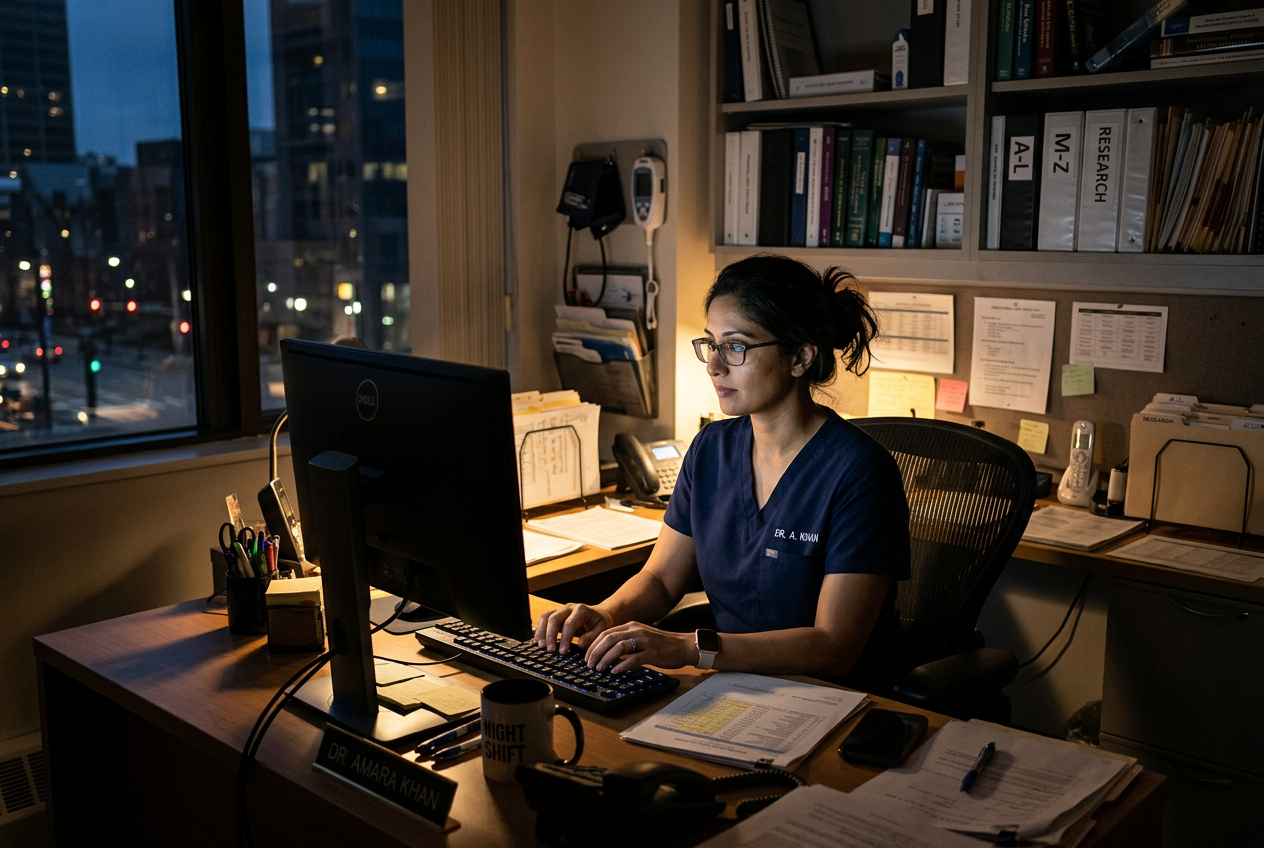
After hours charting remains one of the most consistent contributors to physician burnout. It is not simply extra work. It is clinical documentation that extends beyond scheduled clinic hours, often into the evening, when cognitive fatigue is already high and recall is declining.
In a typical 8:00 AM to 4:00 PM or 9:00 AM to 4:00 PM clinic schedule, documentation frequently begins after the last patient is seen. What follows is often an additional two to four hours spent reconstructing patient encounters that were not fully documented during the visit.
This creates a fundamental issue. Clinical documentation becomes dependent on memory rather than real time capture, which reduces accuracy and increases cognitive load.
Why After Hours Charting Persists
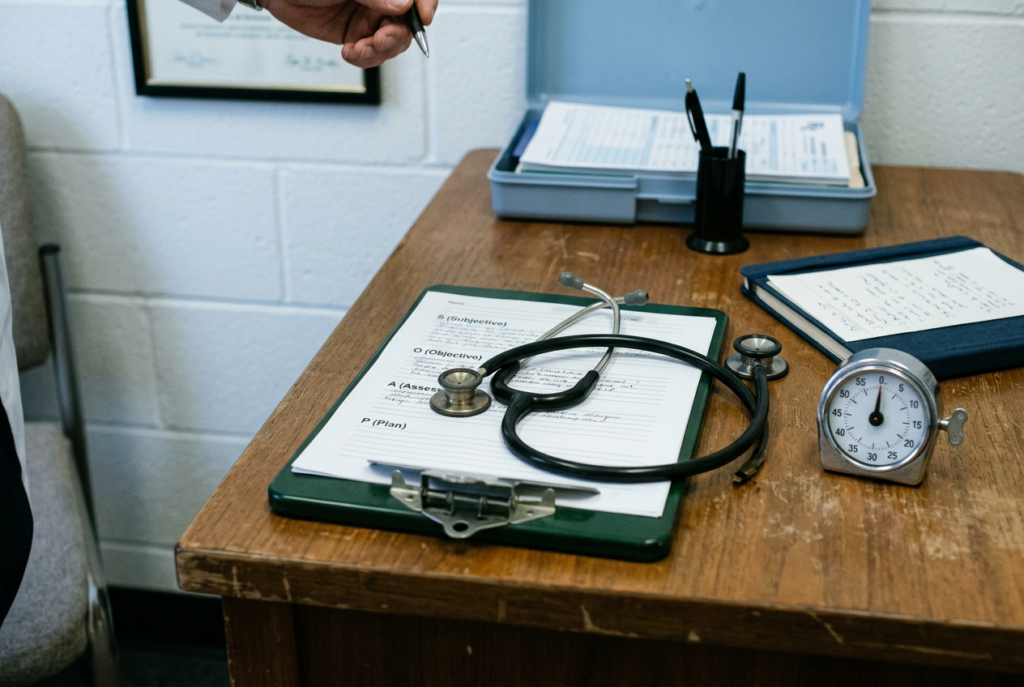
After hours charting is rarely a personal efficiency issue. It is primarily a workflow problem driven by system design.
Common drivers include:
- High patient volume with limited documentation time
- Delayed note initiation during the encounter
- Inefficient EMR workflows and excessive navigation
- Administrative burden such as referrals and forms
Studies show that physicians spend a significant portion of their day interacting with the electronic medical record, often extending work into personal hours [1,2]. This additional workload is strongly associated with burnout and reduced job satisfaction [3,4].
As these pressures accumulate, incomplete charts build throughout the day, forcing physicians into retrospective documentation after clinic hours.
The Risk of Memory Based Documentation
There is a common belief that charting later allows for better focus. Evidence suggests the opposite.
Clinical accuracy declines when documentation is delayed. Memory based reconstruction increases the risk of omission and distortion, particularly in complex encounters involving multiple complaints or nuanced findings.
Real time documentation improves accuracy, reduces missed details, and supports better clinical decision-making [6]. The further the documentation is removed from the encounter, the less reliable it becomes.

Why Working Faster Does Not Solve It
After hours charting is often framed as a speed problem. This is misleading.
Most physicians are capable of documenting efficiently during a consultation when the system supports them. The limitation is not typing speed or multitasking ability. It is friction within the workflow.
Electronic medical record usability has been directly linked to physician stress and inefficiency [6]. When documentation systems require excessive clicks or lack structure, charting is deferred.
Reducing after hours charting requires improving workflow, not increasing speed.
The Shift to Real Time Clinical Documentation
Modern clinical practice is moving toward real time or near real time documentation.
The most effective approach is simple:
Start the note during the encounter and complete it while the context is still fresh.
Even a partial draft significantly reduces the need for after hours reconstruction.

Where Modern Tools Improve Documentation
Recent advancements in documentation tools focus on preserving clinical context rather than replacing clinical judgment.
Real time documentation support allows physicians to:
- Capture structured drafts during the encounter
- Avoid starting from a blank note later
- Maintain consistency across documentation
Emerging evidence shows that ambient and assisted documentation tools can reduce documentation burden and improve workflow efficiency [7].
Platforms such as Dorascribe enable clinicians to generate structured drafts during the encounter, which can then be reviewed, edited, and finalized within existing EMR workflows.
After Hours Charting Is a System Problem
After hours charting is not a reflection of poor clinician performance. It is a system level issue.
It occurs when:
- Patient demand exceeds documentation capacity
- Workflow design delays documentation
- Tools introduce friction instead of efficiency
Addressing after hours charting requires aligning clinical workflows with real time documentation practices.

Practical Strategies to Reduce After Hours Charting
- Start documentation before the encounter ends
- Complete the chart while the interaction is still fresh
When combined with efficient workflows, after hours charting becomes shorter, more accurate, and less mentally demanding.
References
- Sinsky C, Colligan L, Li L, et al. Allocation of physician time in ambulatory practice: a time and motion study. Ann Intern Med. 2016;165(11):753-760.
- Arndt BG, Beasley JW, Watkinson MD, et al. Tethered to the EHR: primary care physician workload assessment. Ann Fam Med. 2017;15(5):419-426.
- Shanafelt TD, Dyrbye LN, Sinsky C, et al. Relationship between clerical burden and physician burnout. Mayo Clin Proc. 2016;91(7):836-848.
- Rotenstein LS, Torre M, Ramos MA, et al. Prevalence of burnout among physicians. JAMA. 2018;320(11):1131-1150.
- Downing NL, Bates DW, Longhurst CA. Physician burnout in the electronic health record era. Ann Intern Med. 2018;169(1):50-51.
- Neri PM, Volk LA, Samal L, et al. Role of EHR usability in physician stress. J Am Med Inform Assoc. 2017;24(2):281-284.
- Patel MR, Vaidya SR, Bounthavong M, et al. Ambient AI scribes and documentation burden. JAMA Netw Open. 2025;8(2):eXXXXX.
- Lin S, Pan S, Chen Y, et al. Impact of real time documentation tools on clinical workflow. J Med Syst. 2024;48(3):45.